The Book Bag: Poetic Voices – October 2026

Autumn is in full flow. The bronze and gold leaves are constantly drifting along the paths and fields. With the arrival of October, it is time to warmly welcome October’s Poetic Voice.

This month, our Poetic Voice is another bumper edition with our poet sharing several poems including pieces from their latest book, as well as an interview which delves into their approach to craft, influences and recommendations for who poets should be reading.

Without further ado, let me introduce the excellent Annest Gwilym.

Annest lives in north west Wales, near the Snowdonia National Park, in the UK. She is a native Welsh speaker.

Her writing has been widely published in online and print literary magazines and anthologies including: Amaryllis, Ariadne’s Thread, ARTEMISpoetry, Black Nore Review, Caught in the Net, Clear Poetry, Culture Matters, DarkWinter Press and Literary Magazine, Fevers of the Mind, Ink Sweat & Tears, LUNCH, Optimum Poetry Zine, Poetry Life and Times, Poetry Space, Reach Poetry, Red Poets, Sarasvati, Sentinel Literary Quarterly, Strange Poetry, The Cannon’s Mouth, The Dawntreader, The Ekphrastic Review, The Journal, The Projectionist’s Playground, The Seventh Quarry, The Wombwell Rainbow, Three Drops from a Cauldron, Visual Verse, Words for the Wild, Ygdrasil, the Templar annual competition anthology Mill (2015), the University of Chester’s competition anthology Patches of Light (2016), the Clear Poetry anthology 2016 and 2017, Disability Arts Cymru’s anthology Out of Sight (2018), Indigo Dreams Publishing’s anthology For the Silent (2019), the University of Chester’s anthology of short fiction Island Chain: Short Stories from the Cheshire Prize for Literature 2018 (July 2019), the Fevers of the Mind Anthology 5: Overcome (2021), Extinction Rebellion’s anthology Rebel Talk (2021), Gwyl Y Ferch’s anthology (2022), Culture Matters’ anthology Gwrthryfel/Uprising (2022) and the Fevers of the Mind Anthology 11: The Lone Road (2024).

She was also included in Poetry Kit’s e-books/anthologies in 2016, 2017, 2018, 2019 and 2020. Her poem The Moon Hedgehog was the featured poem in Poetry in Public, August 2019. She was the featured poet in Caught in the Net (November 2019). She has also been the featured poet in SecondLightLive (October 2024), The Seventh Quarry (January 2025) and The Dawntreader (Autumn 2025) as well as in The Book Bag: Poetic Voices – October 2026.

Her first pamphlet of poetry Surfacing was published by Lapwing Publications in 2018. Her first full collection What the Owl Taught Me (also published by Lapwing Publications) was Poetry Kit’s Book of the Month in June 2020 and one of North of Oxford’s summer reading recommendations 2020. Her third book of poetry – Seasons in the Sun – was published by Gwasg Carreg Gwalch on 15 September 2023 and was Poetry Kit’s Book of the Month in November 2023 as well as being one of their Christmas reading recommendations. She was nominated for the Wales Book of the Year Award 2024. Her fourth book of poetry – Contemplation of Roses – was published in July 2026 by Lapwing Publications and was Poetry Kit’s Book of the Month for October 2026.

She was the editor of the webzine Nine Muses Poetry from 2018-2020.

She has received four Special Commendations and four Shortlisteds in writing competitions in recent years. She received a Special Mention in Sentinel Literary Quarterly’s poetry competition (May 2018). She was shortlisted in the Littoral Press Nature Poetry Collection Competition 2019. She was joint runner-up in the Cheshire Prize for Literature 2015, for short fiction. She was the winner of firstwriter.com’s Fifteenth International Poetry Competition 2016/17. She was a Best of the Net nominee, 2021.

Annest’s latest book , Contemplation of Roses, was recently published by Lapwing Poetry and is a terrific collection of poems divided into two key themes. One examines the natural world, while the latter section examines human nature. Pieces are vivid and relatable and have broad appeal. You can buy Contemplation of Roses, here. You can find Annest on Bluesky: @annestgwilym.bsky.social
For part 1 of Annest’s feature, I will be sharing four poems and her interview. The first poem, was originally published by Fevers of the Mind and it examines Annest’s habit of collecting words.
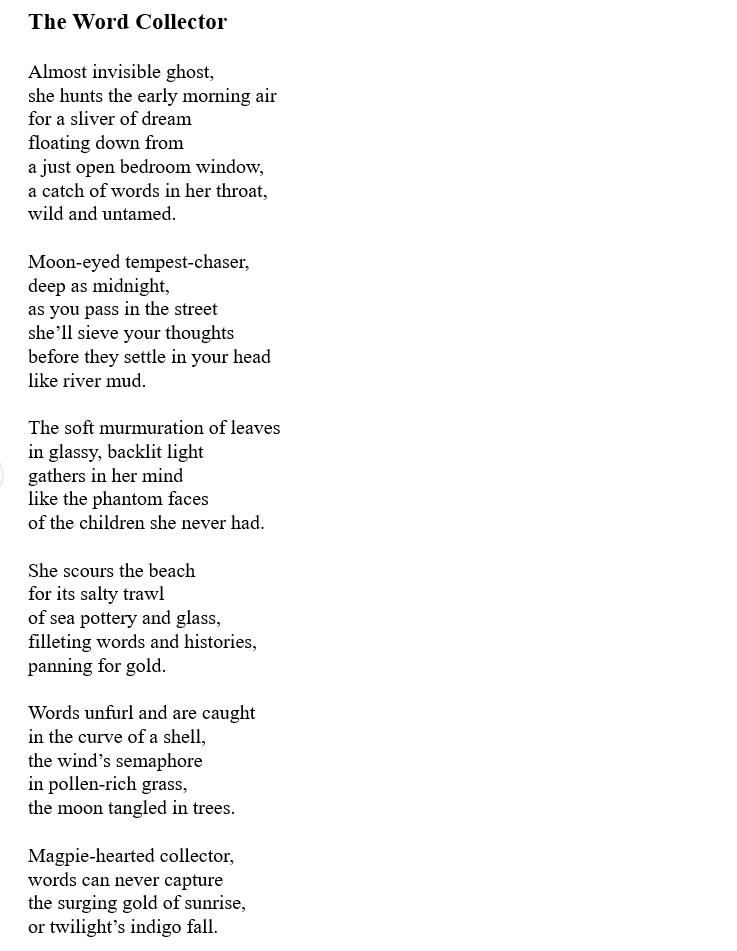
First Published in Fevers of The Mind, 1 April 2021.

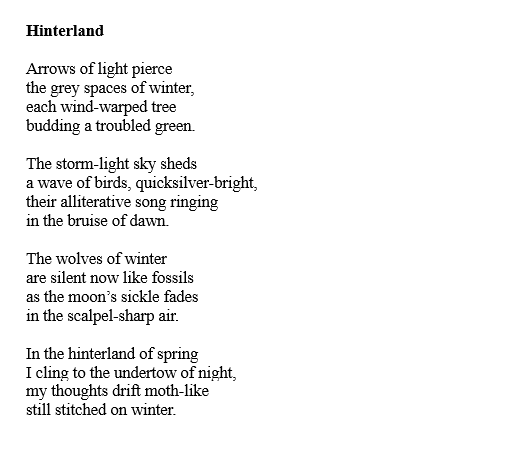
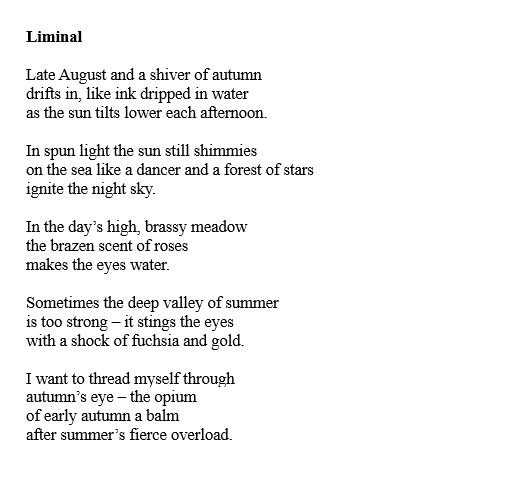
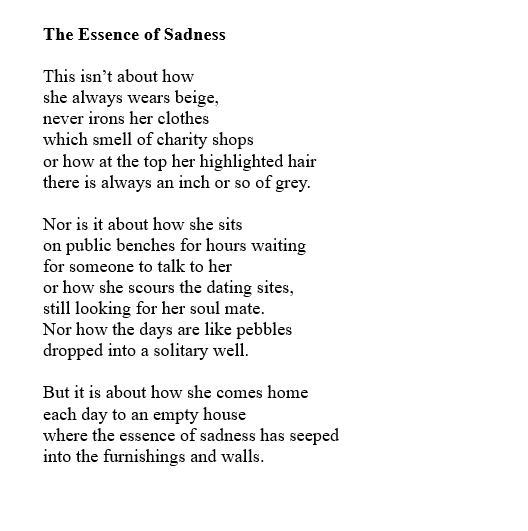
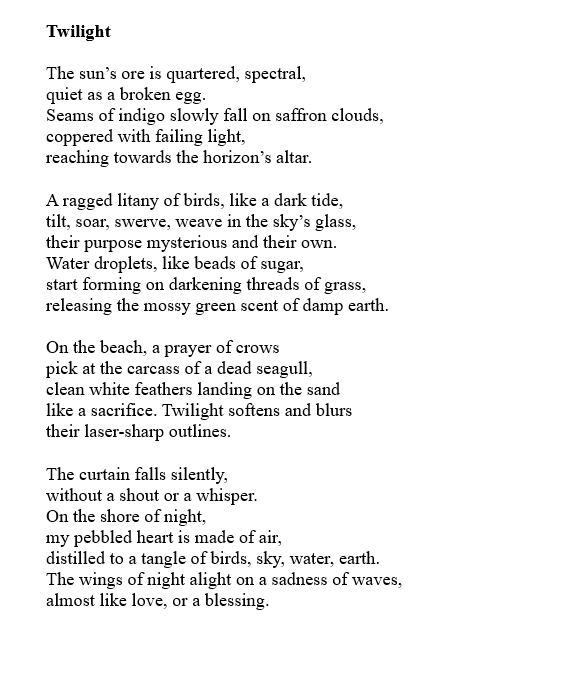
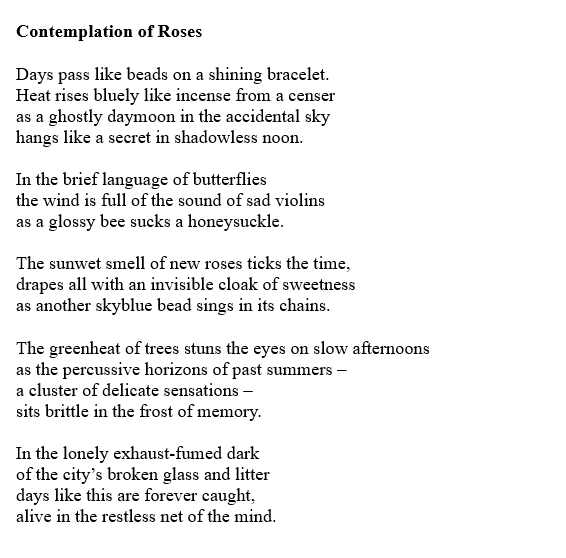
The following poems are all included in Contemplation of Roses.

An Interview with Annest Gwilym

PS: A nice easy one to get started, who would you say your poetic influences are and have they evolved over time?

AG: As a teenager I was a great admirer of the Romantic poets, and like many a schoolgirl, John Keats in particular. His Ode to Autumn remains one of my favourite poems to this day. I particularly like the sensuousness of his imagery, all the more impressive since it was achieved within challenging forms such as the ode and sonnet. I started experimenting with writing as a young child, although most of the writing from my earlier years was about teenage angst!

In my late teens I became interested in Ted Hughes, Dylan Thomas and R. S. Thomas. I remain an admirer of these three poets, but am probably not as influenced by them as I used to be. I liked and could identify with R. S. Thomas’ views on Wales, and also his focus on the everyday – landscapes and common people such as farmers – and his struggles with his spirituality. Ted Hughes I admired because of his stark, honest and vivid portrayal of nature, in all its beauty and ferocity. Dylan Thomas continues to be a favourite of mine because of his rich, lyrical, innovative use of language and powerful imagery. His mastery of the sonics of poetry is particularly evident when his work is read aloud. But on the whole, I sometimes find in Dylan Thomas’ work a ‘sensory overload’ and I prefer R. S. Thomas’ spareness, cleanness of language and sharply-carved imagery.

Over the years, I have also found Robert Frost, Anne Sexton and Sylvia Plath inspiring. They have all been influences on my work, though less so now as my own style of writing evolves. I am also influenced by some of the poets from the avant-garde movements of the 20th century (Allen Ginsberg in particular), though there would be too many to list them all here.

A major influence on my work continues to be Helen Dunmore. She is able to see the poetry in everything, and her style, sensuous but delicate and surprising is what makes her stand out for me. She spans the everyday domestic scene to mortality with the same grace and grounded sensuousness and spareness of imagery. She is unafraid of writing about difficult issues such as child abuse and death. A poetry mentor of mine used to say that there is poetry in everything in life, and I hold with that belief.

A more recent influence is the work of Canadian poet K.V. Skene. Her work is unlike anything else I have seen being written now, and is totally original in terms of content and layout on the page (she is not afraid of experimenting with form or language). I have recently read her book Seasonal Adjustments and was very impressed by her originality and lightness of touch.      

PS: In your new book Contemplation of Roses, nature plays an integral role. How do you capture the landscape, so it is as vivid on the page as in your mind, for example do you take photos, draft a description or is it from memory?

AG: It is mainly from memory, although I will sometimes take notes after a walk for instance. If I am unsure of something I am writing about, I will go back and take another look, or research it online. I keep a notebook of these memories, interesting ideas, themes and language. Some become poems, so do not. I also keep a document containing fragments and lines from failed poems, which I sometimes revisit and use again in another poem. When writing about nature, I am always aware of not falling into the trap of cliché or blurring the imagery by using too much. Sentimentality is also something I try to exclude from my writing about the natural world (or anything else), as it can be experienced and felt as inauthentic. One clear, sharp, original image is better than 20 clichéd ones. I wrote a poem in my last book – Seasons in the Sun – which is about me and my tendency to collect words (see The Word Collector, above).

PS: Following on from that, this book is your 4th. What is the most notable change in your style and process compared to when you wrote Surfacing (2018).

AG: My style is now not as confessional. I now try to write from other perspectives as well.

PS: In Contemplation of Roses, I really enjoyed the variety of perspectives used. Do you always know how the poem will be addressed (i.e. first, second or third person) before you draft or do you try from multiple perspectives?

AG: I usually decide on which perspective to use before writing the poem. There is no set process for this, it’s usually which approach works best with the poem.

PS: Thank you. Was there a particular event or memory that sparked your poetic journey?

AG: As I’ve mentioned elsewhere, I started trying to write as a child, first by making up and telling stories to my younger sister. I started writing poetry as a child/teenager, most of which was about teenage angst. The only success I had in childhood was to have a poem, written in Welsh, published in a local magazine, 1 of only 2 to be chosen from my school. I tried writing poetry again at university (Lancaster), again not publishable and after that became caught up in the pressures of life, work and trying to pay a mortgage. I didn’t start to write and submit my work seriously until my late 30s, although no one event sparked this. In the early stages of my writing career I found the website ABCtales.com helpful, in that you could post and receive supportive and helpful feedback from other writers, without the pressure of submission. I have always been a lover of literature and one of the things my late grandmother used to say was that I was never to be found without a book in my hands.

PS: If Contemplation of Roses could leave readers with one main thought or feeling, what do you hope it would be?

AG: Contemplation of Roses is very much the world as I experience it, and expect another person’s reaction would be quite different, and that is fine. I very rarely write poetry that is overtly political (there is nothing I dislike as much in poetry as political rants, or someone telling me how I should feel). So I tend to hope that the reader enjoyed my work, and came to their own conclusions.

PS: I imagine you are being asked this a lot as you’ve just released your book, but, do you have any other projects in the pipeline?

AG: I am currently on a Mentoring Masterclass with a very experienced poet. I won a bursary to take part in this. So far, we have covered a lot of information on the avant-garde movements of the 20th century in particular. As a consequence of this, it has led me to desire to make my work more distinctive, experimental and abstract even. I have found the website Language Is a Virus helpful for experimenting with language. The Cut-Up Machine is particularly helpful if you are looking for unusual juxtapositions of language in your work. I have used this tool for recycling old, retired short stories and have produced some quite innovative language combinations which I’ve used in my poetry.

PS: You are a native Welsh speaker. Would you like to see more contemporary Welsh language poetry/native language poetry being commercially available?

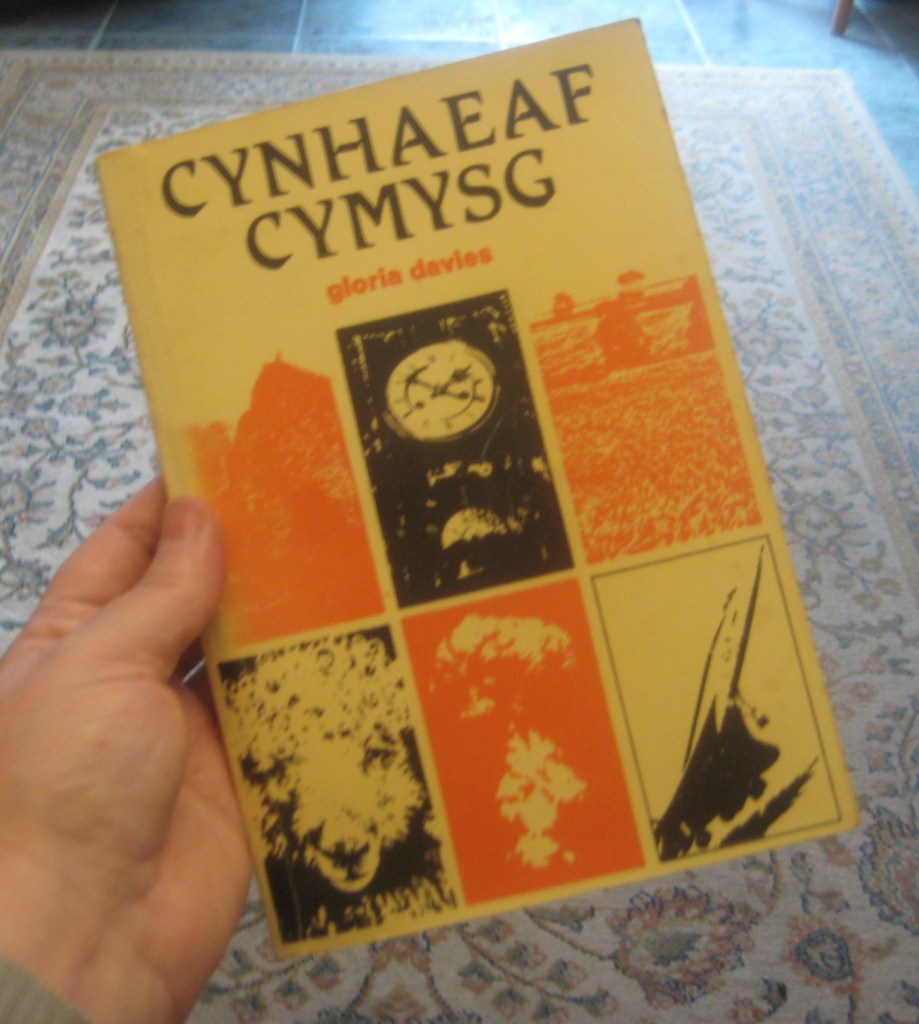
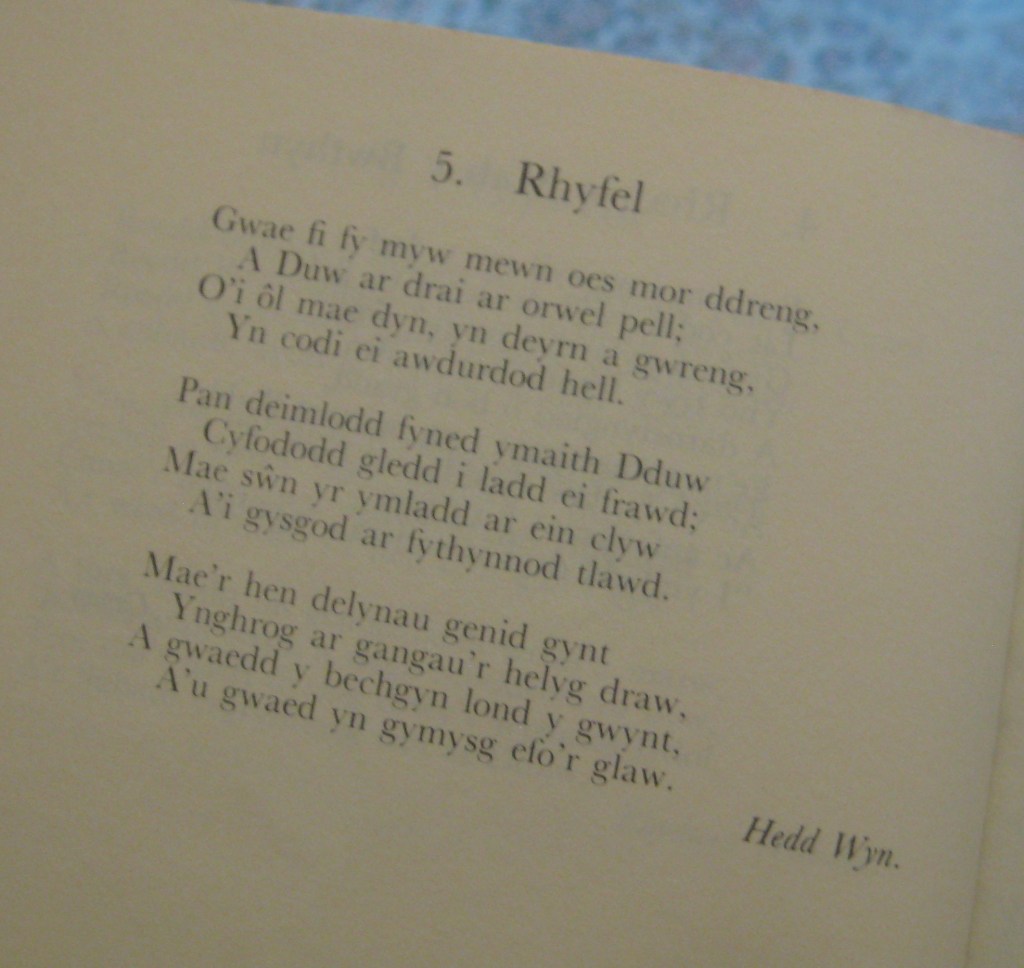
AG: Welsh language poetry is available, in Wales. My previous publisher – Gwasg Carreg Gwalch – publishes books in both English and Welsh. However, Welsh language poetry is not readily available outside Wales. It is on the Welsh school curriculum and I myself have an O Level in Welsh Literature. It is possible to do Welsh degrees (Language and Literature) in universities such as Bangor, Aberystwyth and Cardiff.
PS: You have a visibly strong connection to poetry. Are there any further creative pursuits that you would like to engage with?

AG: Over the years, I have experimented with a variety of arts and crafts, sometimes spreading myself a little thin. Poetry is the art that I feel the most connection to, although I am very attracted to visual art as well.

PS: And finally, what is the best piece of advice you have received about writing poetry that may benefit other poets?

AG: Never give up, read as much good poetry as you can (and not just on social media) and try to improve your work by attending courses, workshops or mentoring with a more experienced poet.

One piece of good advice I was given by a prolific and successful poet is that rejection happens to everyone and not to give up (he once told me he could paper his house twice-over with all the rejection slips he’s received in his life). Having been editor myself (Nine Muses Poetry 2018-2020) I know that editorial decisions are not always the right ones and it may simply be a case of finding the right venue for your work. Asking for feedback may also be helpful, although many editors are reluctant to give any.

Another piece of advice I would give is about line endings in poetry (one of my bugbears): they are there for a reason, and should form a natural pause. Reading your poetry aloud would give a better idea of where natural pauses occur. I see many poems these days (especially on social media) that end mid-sentence, mid-flow (even on words such as ‘the’), and it is a tendency that should be avoided, although it tends to be young or inexperienced poets who make this particular error.


Return on October 16th to read the remaining three pomes from Annest’s book Contemplation of Roses. If you can’t wait that long, buy the book here.

The Book Bag: Poetic Voices – April 2026

Welcome to April’s Poetic Voice. Yes April! You won’t find any fools here though. You will find this month’s incredible poet.

I first encountered them on social media, responding to the same prompts as me. I was impressed by their language and their subject matter. It was at a couple of open mics I first heard their moth poems…

And this month’s feature is jam-packed. Not only do we have a selection of poems including pieces from their new pamphlet releasing in April but also an interview…

Without further ado, this month’s Poetic Voice is Eleanor Holmes.


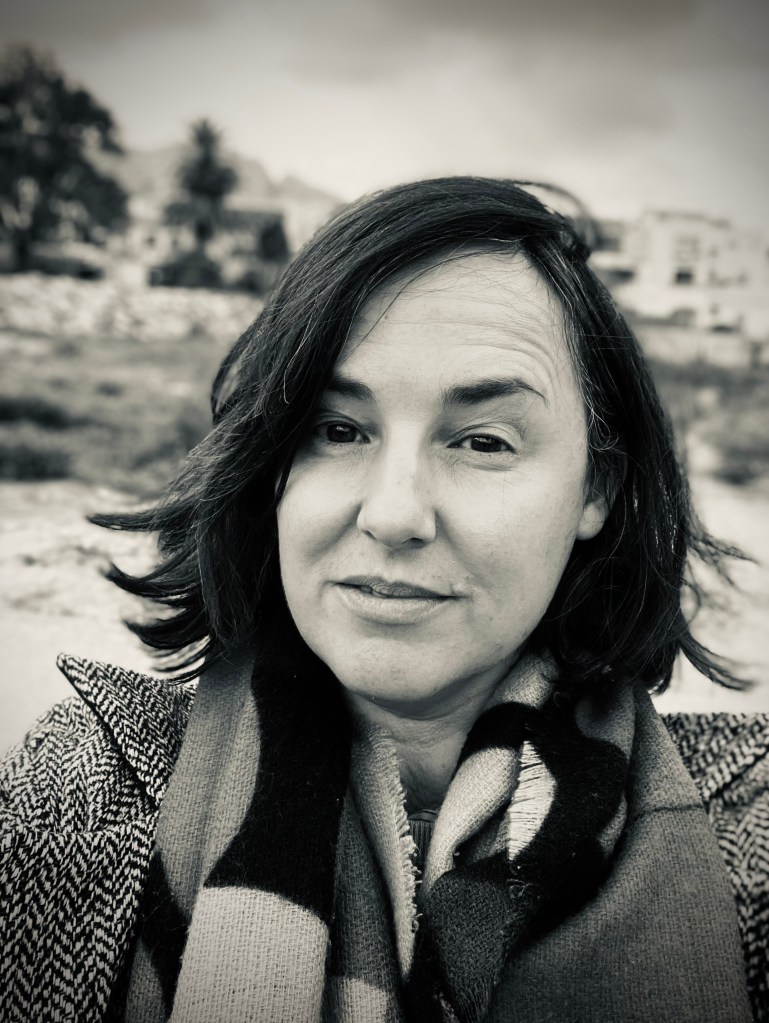
Eleanor Holmes (previously writing as Eliot North) is a neurodivergent mother-doctor-writer of prose, poetry and hybrid. Originally from Bristol in the UK, she has spent her life exploring different cultures and countries, loves to collaborate with other creatives and has a life-long obsession with illustration, printmaking and beautiful handmade books. She lives with her son and husband in Valencian Country, Spain, and works as an NHS GP in Weston-super-mare. Widely published in print and on-line, she was commended in the National Poetry Competition 2014 and shortlisted for the Bridport Poetry Prize 2025. #Moth is her first hybrid collection.

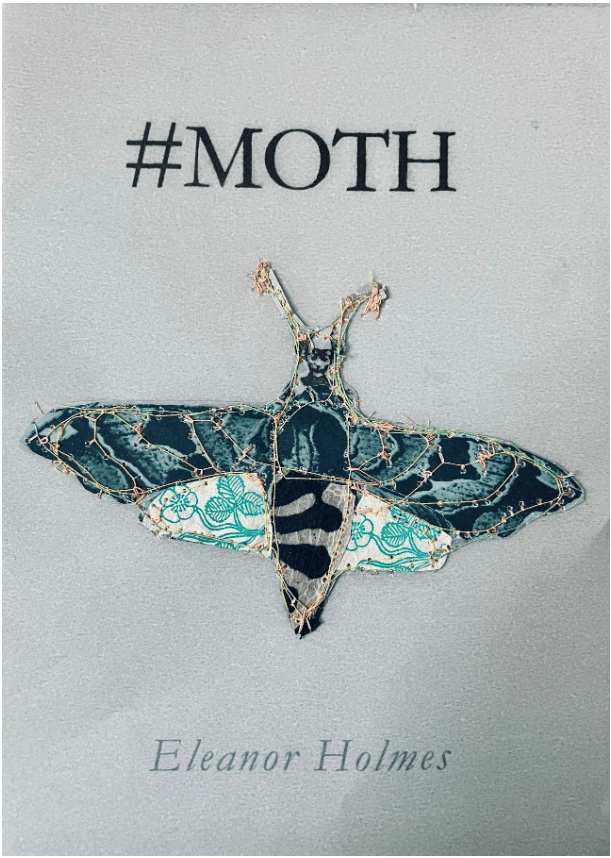
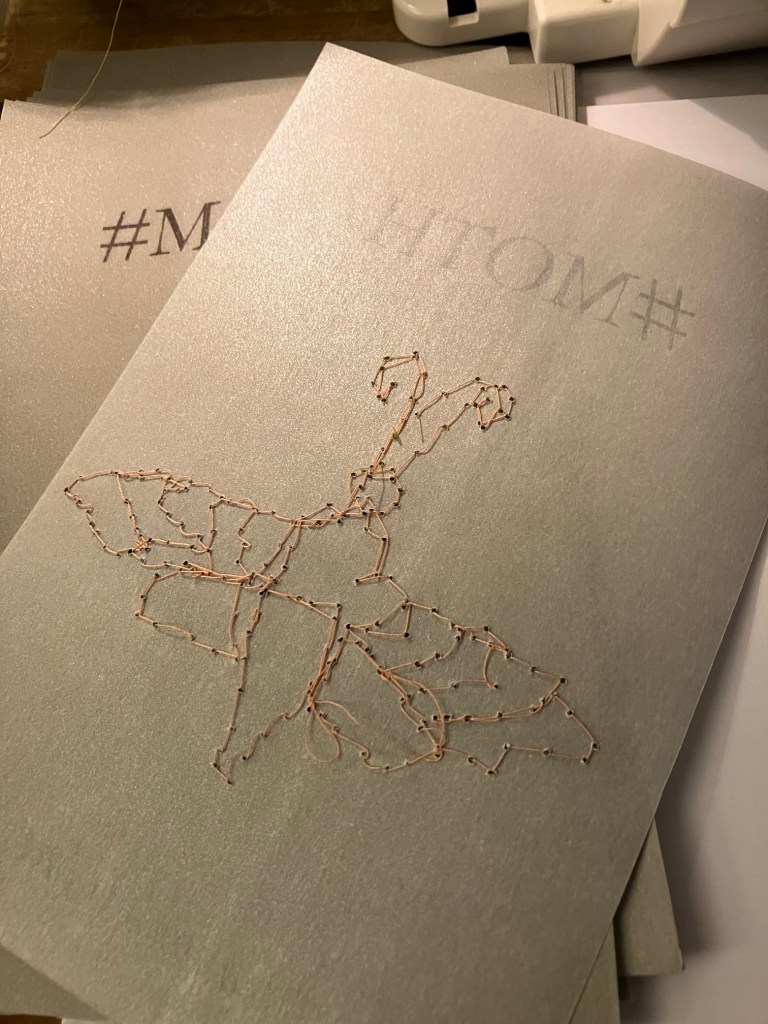
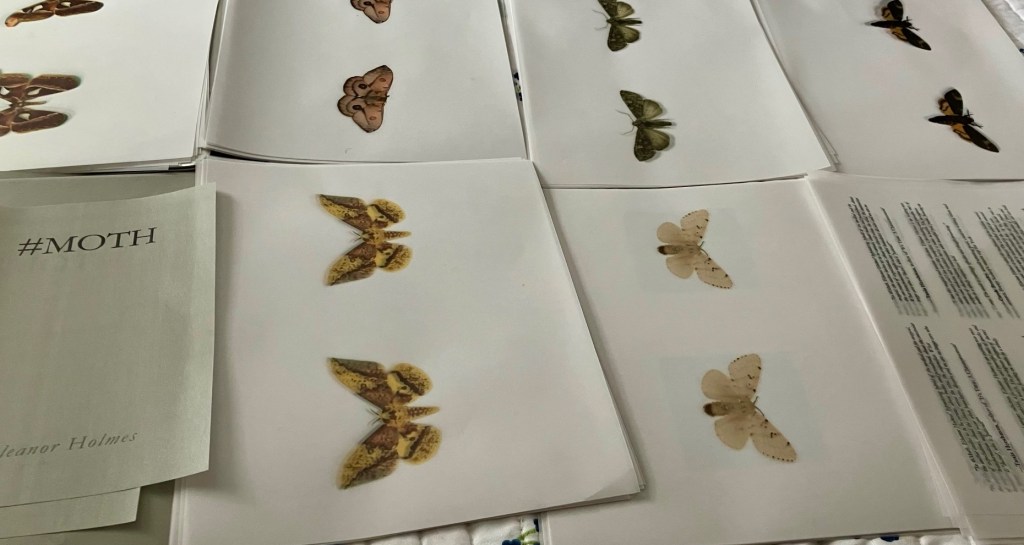
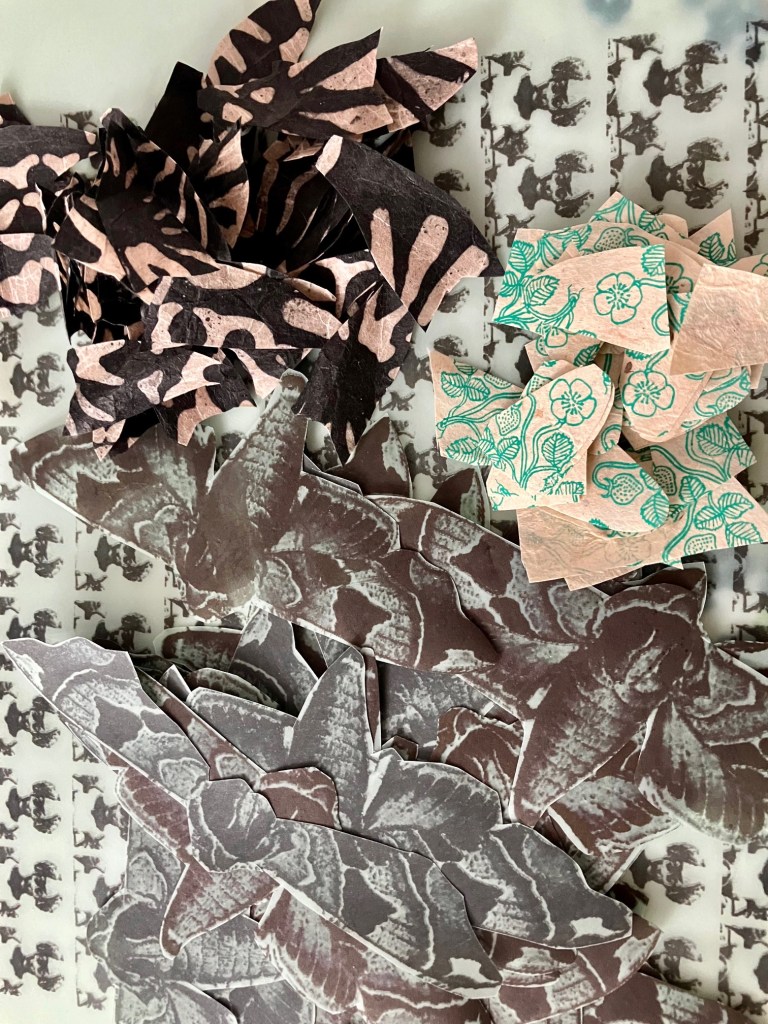
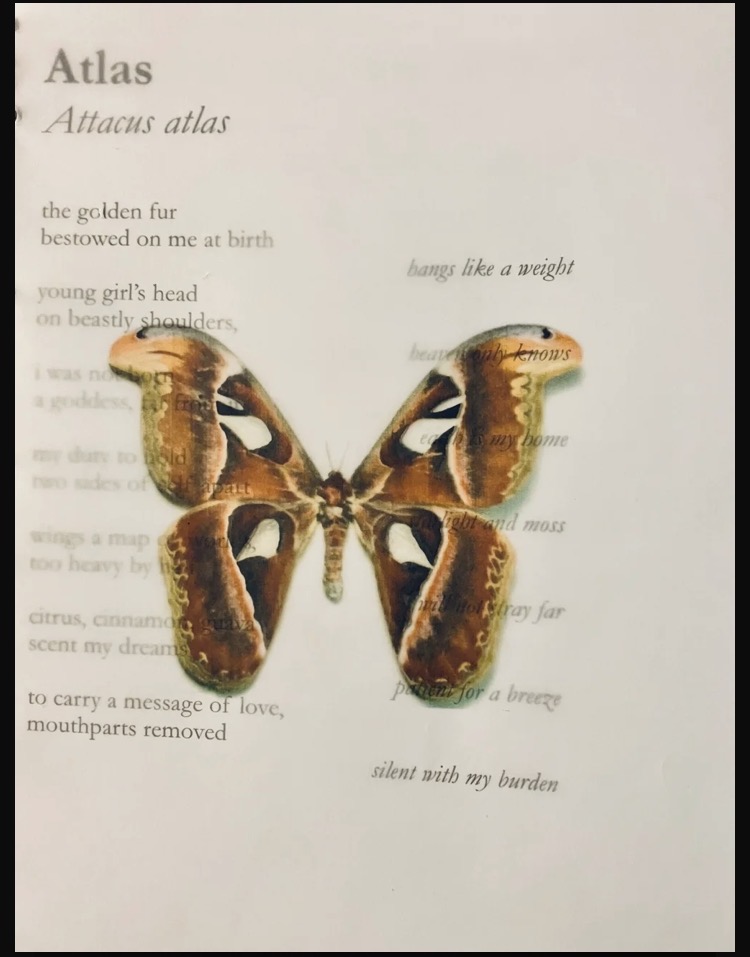
For the first part of the feature, we have a piece from #Moth, which can be ordered from Ethel Zine here. The books are handmade and have an incredible quality to them as you can see from some of the images below. A massive round of applause for Ethel for the amount of effort they make in their publications.

Eleanor has also treated us to a recording of ‘Trap’, one of the poems from the collection which is accompanied by harp. Listen here.

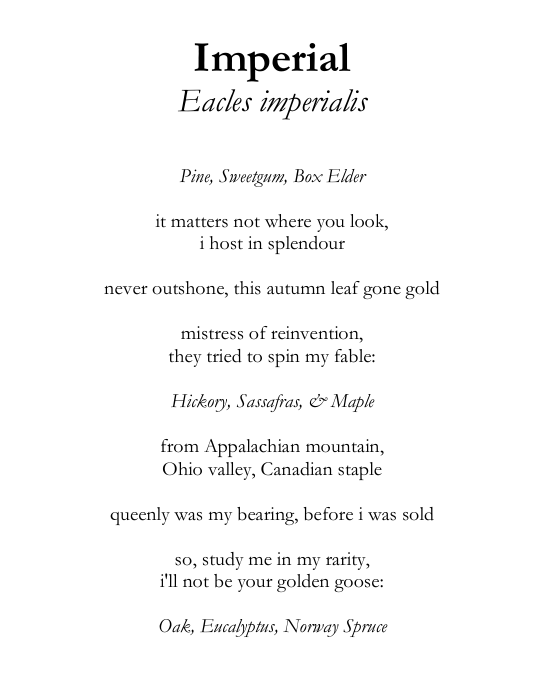
This brings me to Eleanor’s first poem. Imperial. This is one of my favourites from the collection for its multi-sensory feel.


A Few Questions and Answers from Eleanor on her Writing Process

PS: Eleanor, what was the inspiration for #Moth?

EH: #Moth started life in a Tania Hershman workshop ‘Hybrid Writing: Unbox Your Words’ back in 2021. The whole course was focused on ‘hybridity’ in terms of theme as well as form.

Tania had us coming up with all sorts of ‘Chimera-like’ ideas, using scientific text exploring genetics and chimerism as inspiration, as well as myth and imagination. The idea for my main character ‘Vadoma’, a moth-woman hybrid, came from this start. Many of the poems in #Moth weave the natural history of moths with the personal narrative of my main character, with a sprinkling of magic realism.

Tania’s hybrid writing technique or ‘mash-up’ approach to different writing styles resonated with me. Taking scientific texts, adverts, images, shopping lists, fairytales, procedurals, forms (anything goes) and mash it, cut it up, splice it with something else entirely. I don’t like to be pigeon holed, in life and in my writing, and this approach made sense to my neurodivergent brain.

I’ve been both fascinated, and equally dismayed, by the language of medicine over the years. When I studied psychiatry as a student, terms like ‘word salad’, ‘knights move thinking’ and ‘flight of ideas’ that are used to describe formal thought disorder really got my brain humming. The idea of ‘punning and rhyming’, ‘pressure of speech’, use of ‘neologisms’ being a sign of mania or psychosis, and that looking for these formed part of the traditional Mental State Examination (MSE), really intrigued me as I thought to myself: these are all things I have experienced to some extent, they form the basis of so much creativity, performance, poetry particularly.

In saying this I don’t wish to minimise the impact of serious mental illness. I believe good psychiatric care and mental health service provision saves lives. It is more an observation that in medicine the ‘them and us’ narrative serves no one.

In writing #Moth I aimed to take the language of medicine apart; examine it and twist it to shine new light on it. I wanted to explore: ‘what is normal’ and examine the power imbalance inherent in the way medicine operates, and then I wanted to try and flip the narrative. Tania’s course provided me with both the inspiration and the hybrid writing techniques to start this process.

PS: What does your writing process typically look like?

EH: I call myself a ‘magpie writer,’ my brain is constantly looking for the next shiny thing to latch on to. Scraps of speech, my son and I walking to school is a fabulous source of material just now: a six-year-old’s imagination knows no bounds and veers between the delightfully surreal and completely matter of fact.

This chatter with my son and observing my surroundings, little things glimpsed in the everyday, like a cormorant gliding by on my walk home, or a pearlescent piece of shell on a beach keeps my creative brain buzzing. Living in Valencian Country in Spain, where my husband is from and my son was born, is a gift for a writer noticing the ‘unusual’ in my surroundings, immersed in a different culture, language and landscape. This combined with the endless mine of creative material that is my memory, especially of childhood, means the ideas never stop coming. Pinning them down, crafting them, that’s the tricky part.

I make notes on my phone when I’m walking, or when I get home, or before I go to sleep. I collect scraps of things and then try and make sense of them as a whole, stitching words together, moulding them into something new. There never is a ‘this is a poem’ or ‘prose piece’ in the way I approach writing these days, it tends to just come out like a block of text or stream of consciousness. Form, or thinking about form, tends to come later in the process, when I’m trying to make sense of what material I’ve got. That said, I wrote a sestina recently in a Kim Moore and Clare Shaw workshop, and it led me somewhere unexpected which was fun.

I’ve always been an outsider, as a child I was pretty much mute and always observing. I learned to mask this, to function ‘better’ in a world that expected more from me. In medicine I was definitely an outsider as well, but I found my tribe of other ‘odd ball’ creative medics along the way. It is only in perimenopause, and as a woman who gave birth later in life, that I’ve realised how much of the way my brain works and my inherent need to create, is linked to my own neurodivergent thinking.

PS: Your background is in medicine which requires a use of clinical language, how do you arrange the precise clinical language versus the poetical in your mind when crafting your work?

EH: This is a really interesting question, because often I don’t think my clinical language is precise. It clearly is in some ways, has to be, in that there is an expected way that clinicians communicate with each other and diagnosis at its core is based on communication and taking a ‘history’.

The whole language of western medicine, the historical context and assumptions, all the inherent problems I just discussed above are stitched into the way we communicate as clinicians. We learn this language from day one at medical school, and I’ve often said as a medical educator, through this process we almost teach students to become worse communicators as a result. A situation that then means you can spend your whole career attempting to undo that learned reductive way of thinking and speaking (or not, depending on the clinician!)

Now as an adult, living in a country where my mother tongue of English is not the spoken language of the day to day, I am learning first-hand how hard this is to navigate. The jumble in my brain is often utterly exhausting and many times my ability to communicate totally falls apart. Add to this my husband’s mother tongue is Valencian (Catalan) and I’m trying to learn Castilian (Spanish) at the same time, then all sorts of scales have fallen from my eyes, particularly about the privilege attached to being a white, native English speaker (but also the lack that being monolingual inherently represents.)

For me language, and so poetry, is playful. In my communication with patients as a GP, I have to actively check my use of ‘medical language’ or jargon when I’m speaking to people, these days mostly on the phone working remotely from Spain. This isn’t that hard to do these days; I find communicating with patients a real joy when I can match or mirror language used and explore shared experience and common ground. Creating connection and trust is one of the most, if not the most, important thing in my medical practice. Without it, I wouldn’t be able to achieve anything as a doctor, well nothing positive anyway.

So, to actually answer your question, I don’t think my clinical language is precise, or that my poetic language is not precise. In some ways maybe it’s the reverse? The two are inseparable. I find the poetic in medicine, because people are messy and endlessly surprising. Poetry is precise, condensed, intentional; much more so in some ways than my clinical language which has become like driving a car, or shorthand. Creative writing for me breathes life into my learned medical language, it allows me to play with it, see the possibilities outside the clinical, then hone and hone and hone to become something else entirely.

Words matter way more than we are given to believe at medical school. Poetry, amongst other things, has helped me to see this more clearly.

PS: What piece of advice would you give to poets?

EH: I would say don’t be too hung up on writing ‘poetry’, just write. That first outpouring on the page, and the flow state I find with creating anything, is such an absolute pleasure and catharsis for my busy brain. It doesn’t have to go further than this, but also it can!

There are many ways to approach poetry and creative writing, and there is as with any creative process, a craft to be learned. My advice, as so many have said before, is read, and read a lot! Read for pleasure but also start to take note and pull apart what someone is doing when you really connect with their work. This has helped me enormously to start to pay attention to what a writer is doing in a text and then thinking ‘how did they achieve this?’

For me attending lots of workshops with great writers I admire has helped loads and broadened my reading and introduced me to new writers and creatives. This doesn’t need to cost a lot, and on-line works really well for me in terms of flexibility around family life (see January Writing Hour with Clare Shaw and Kim Moore.)

Connecting to poetry communities on social media like #poemsabout and #promptcombo on Bluesky and @TopTweetTuesday on X is also a great way to write more and receive feedback.

Reading your work aloud at open mics (see Paul’s excellent Book Bag open mic), connecting with other writers and building a trusted group of fellow creatives you can share your work with, and expect and give honest and supportive feedback to, has been essential for my development as a writer.

This and approaching established writers whose work you love for mentorship – big shoutout to Carole Bromley and Rebecca Goss – who have both helped my craft and confidence enormously in the last year.

PS: Finally, after reading #Moth, who else should people be checking out?

EH: If you like the hybrid nature of this book, then Tania Hershman is ‘The Queen of Hybrid’ and her latest book ‘Time: a Cronomemoir’ is out with Guillemot Press. The serialised audio of this on Tania’s Substack is ace, as well as her back catalogue of work on her website. Tania is a huge inspiration and a really fab workshop facilitator as well. https://taniahershman.com

I have become a bit of a fan girl of Nina Mingya Powles. How her writing spans all forms and genres and embraces hybrid. I would start with her marvellous ‘non-fiction’ essay writing. Being a foodie, I especially loved ‘Tiny Moons’ with The Emma Press, as well as her latest collection of poetry ‘In The Hollow of The Wave’ with Nine Arches Press. Her blog Crispy Noodles is ace and always makes me marvel at her writing as well as making me hungry. https://ninamingya.substack.com

I love any writer who embraces play and was alerted to Jon Stone and the concept of ‘Ludokinetic Poetry’ when he wrote a Poetry Society piece for National Poetry Day on a poem I wrote years ago called ‘The Crab Man.’ Jon’s website is a rabbit hole of invention that I could happily spend hours exploring. https://www.gojonstonego.com

Definitely check out Elizabeth Osmond‘s forthcoming debut poetry collection ‘Hatchery’ coming out with ‘V. Press’ late this year: a magical weaving of Beth’s neonatology consultant background, the history of this medical discipline, as well as the realities, joys and heartbreak of working in care and the NHS. This is a poetry pamphlet not to be missed! @bethosmond.bsky.social

For sheer artistic brilliance check out Sarah Raybould whose work spans filmpoetry, musical composition, performance, spoken word, visual art, dance and hybridity of all kinds. Sarah’s latest filmpoetry compositions with ‘IceFloe Press’ and ‘Ink, Sweat & Tears’ are stunning. She will also feature in Black Bough’s Silver Branch Series soon, so don’t miss that. @raybould_drs on X

I could go on, there are so many fab writers out there on social media, on-line and in print publishing, as well a whole host of fabulous independent presses, of which Ethel Zine is one that I particularly admire. Those writers mentioned above are all quite different, and a mere toe-dip into the pool of poetic creativity I see around me.


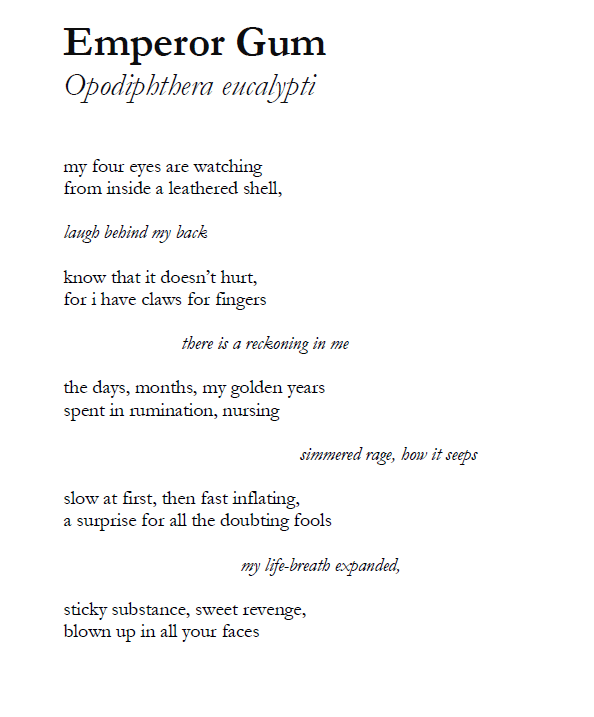
#Moth truly is a fantastic and special book. I’m thrilled that Eleanor and Ethel Zine vision was realised in the production of #Moth. ‘This second poem ‘Emperor Gum’ is another of my favourites.

If you’d like to attend the #Moth online launch happening on Sunday 19th April, click here for full details and to grab your free ticket. It’s going to be a marvellous event.


On Sunday, I had the pleasure to read at Eleanor’s launch of #Moth, expertly hosted by Eleanor’s good friend Rachel. It was a terrific evening filled with poetic bonhomie.

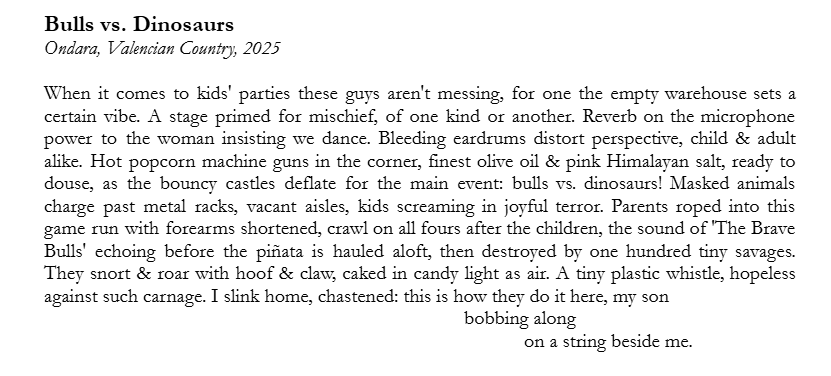
This, Eleanor’s third poem is not from #Moth but is a sweet and happy prose piece called ‘Bulls vs. Dinosaurs’.


Book Bag Mini – #Moth

On the final day of April, here’s a parting gift for this month’s Poetic Voice, Eleanor.

I don’t want to give too much away. There is a narrative thread that weaves its way through this hybrid collection that would be a great addition to all poetic’s bookshelves.

Eleanor opens the collection with ‘Trap’ (you can listen to the recording above) drawing you in to a metamorphic world. The interspersing of medical settings with the appearance of several Moth character poems gives the book adds a mystical dimension. Emotion is never far from the surface and readers are allowed time to consider every poem before moving to the next piece.

Form and language are played with throughout. Some are conversational, some are prose, there are brave formatting choices.

I will also mention the outstanding quality of the book. The fact they are all handstitched and have incredible design aspects is a testament to the collaborative relationship between publisher and poet. Ethel make exceptional products. 

My favourite poems are the two that featured right here, ‘Imperial’ and ‘Emperor Gum’ but I also must give a shout out to ‘Atlas’, ‘Death’s Head Hawk’ and ‘Speech’. 

Grab your copy from Ethel here.

And here’s a customary playlist;

Catrin Finch – The Elfin Knight
Björk – All Is Full Of Love
Alela Diane – White As Diamonds
Swedish House Mafia – Moth To A Flame
Julianna Barwick – The Harbinger
Alice Coltrane featuring Pharaoh Sanders – Isis & Osiris
Foo Fighters – Learn To Fly

Thanks Eleanor for being April’s Poetic Voice.

Wishing you continued success,
Paul