We’re into the second ‘ber’ month in a row and you can definitely tell, the weather has been havoc. I hope you’re all staying warm and safe and healthy in run up to December’s festivities and holidays. To all my US readers, I pass on my thanksgiving wishes to you. If any of you have a good recipe for pumpkin pie, I would love for you to send it over!
As we welcome November, we also welcome a new Poetic Voice to The Book Bag. I have known this poet for a little bit of time and their work is always multilayered and original. I have been lucky to have heard them live multiple times, read and re-read their work and share pages in anthologies. It was also a massive honour to be trusted to host the online launch of their latest book, Forest Management. A writer I have all the time in the world for…
Without further ado, welcome S. Reeson.
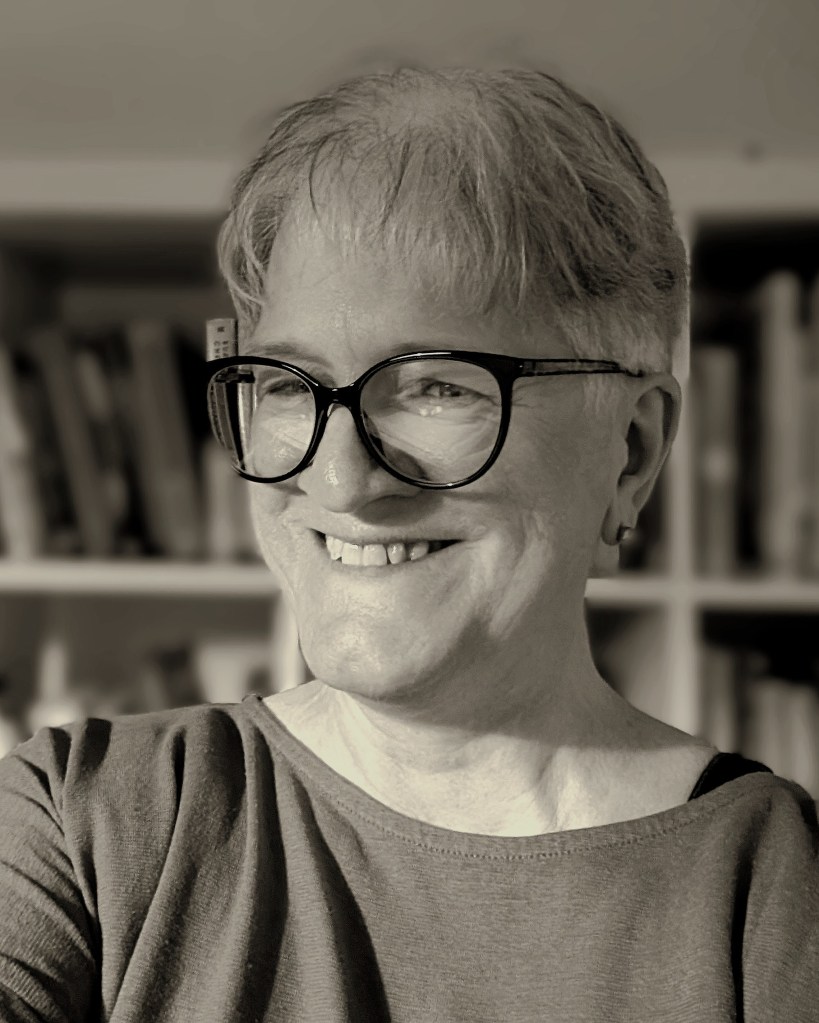
S. Reeson (she/they) is a working-class, neurodivergent poet whose space and shape poetry is underpinned by mental health, existential angst, speculative fiction and the current state of the planet. After winning a Poetry Society members’ contest in 2018 they wrote 24 poems about their home town for the Places of Poetry online initiative, one of which was included in the official anthology published for National Poetry Day in October 2020 by Bloomsbury/One World. This poem was then reproduced by The Daily Telegraph and read on BBC Radio 5 Live’s Up All Night programme.
A debut pamphlet with accompanying art and photography, Flammable Solid, was published in November 2022 by Flight of the Dragonfly Press. In April 2023 a chapbook, No Gloss… No Veneer, No Filter was produced by Back Room Poetry. They have been published in over 30 magazines and anthologies, including Under the Radar and were shortlisted in April 2026 for Poem of the Month by Verve Poetry Press.
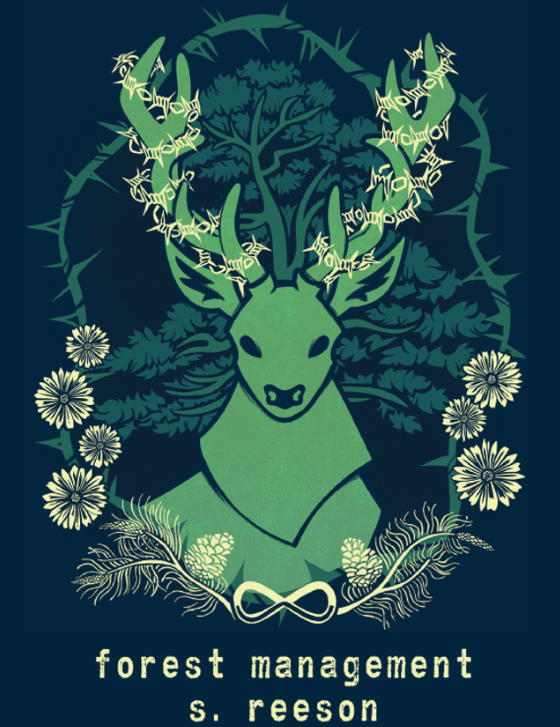
In the same year they were selected as Poet in Residence for the Leigh Art Trail in Essex, and a Writer in Residence at Metal Southend as part of the Essex Book Festival, where they also taught poetry on behalf of the South Bank Centre as a component in the Poet in Every Port initiative. Their second pamphlet, Forest Management, was published on October 23rd.
Both their poetry and photography has been formally exhibited across Essex and East London, and they are on the Steering Committee for the Southend Creatives CIC, where they advocate for a fair deal for all creative industries in their home city.
They are currently putting the finishing touches to their first collection.
To find out more and keep up to date with what S is upto you can find them here;
Website: https://no-gloss-no-veneer-no-filter.ghost.io/
Instagram: internetofwords
Bluesky: internetofwords.com
In this month’s Poetic Voice feature not only do we have some excellent poetry from S, we have an interview, details on their other projects. There is something special happening in part 2, but my lips are sealed.
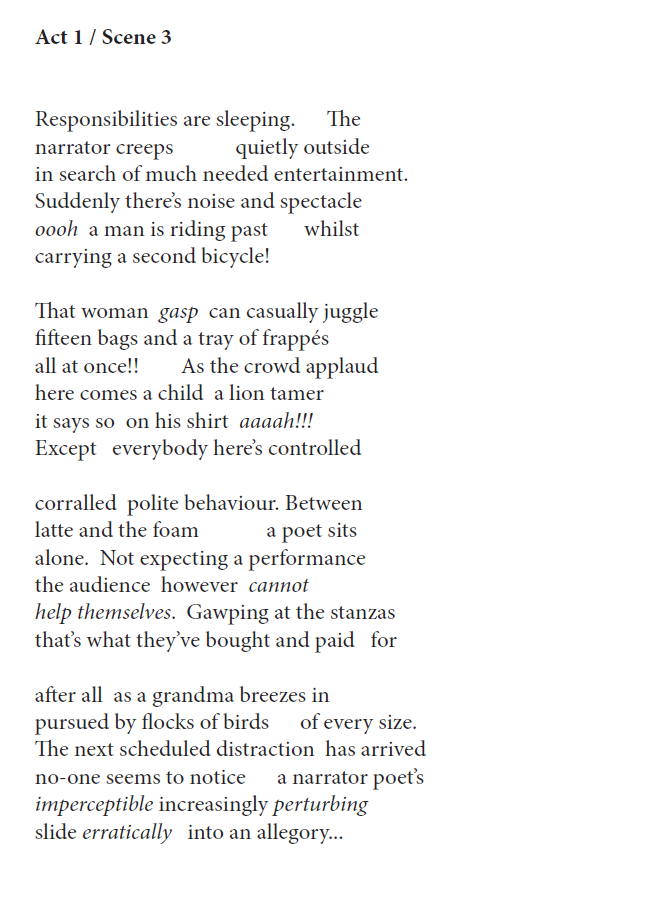
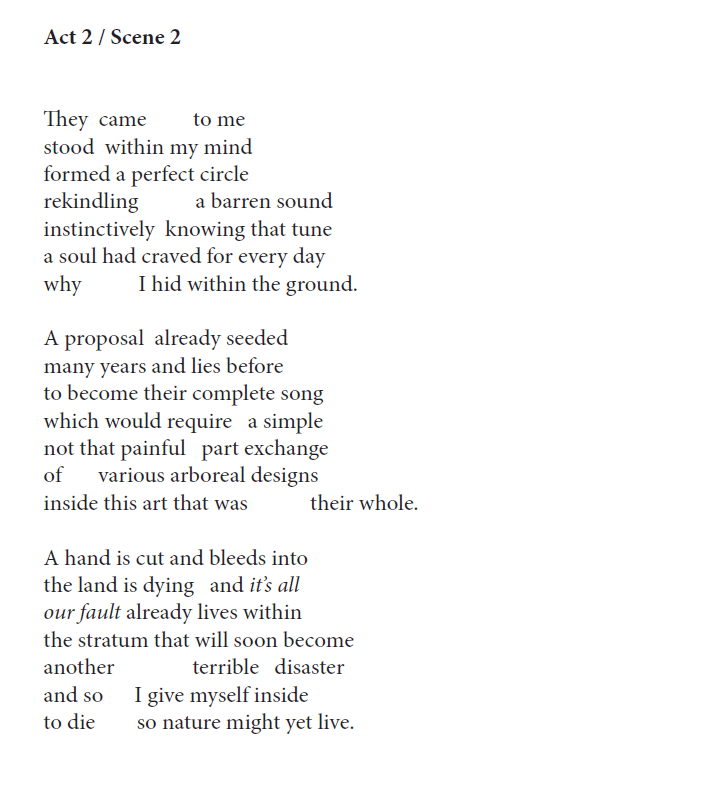
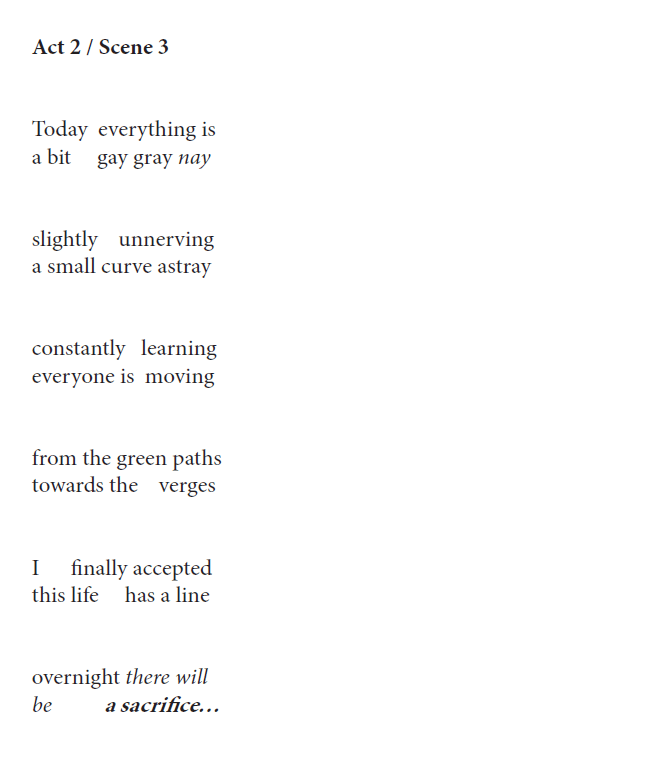
The following pieces are taken from Forest Management, a superbly presented book of poetry made up of acts, similar to how a play appears. Special thanks to Flight of the Dragonfly for permission to reproduce the poems.
A Q & A with S. Reeson
PS: Firstly, a question I like to start with. Who are your poetic influences and how have they evolved?
S: I was the first woman in my family accepted to college in 1985, to do an English and Media course. My poetry education involved a great deal of ‘traditional’ staples: none of them sparked joy in any reasonable measure. It was when I ‘discovered’ The Mersey Poets (Adrian Henri, Roger McGough, Brian Patten) that a spark of connection took place: there was a definite association with the themes and forms that they used. I aped their work extensively.
There was then a long period in the poetic wilderness, until my interest was reignited by Ian McMillan in the mid 2010’s. I’d been taught about Emily Dickinson and Virginia Woolf at school but was not emotionally acute enough at the time to accept what these women had done and the fact that absolutely no female poets appeared in my reading list at college should have been more of a warning sign than was then the case. There was a lot of catching up to do.
I’d say 80% of my bookshelves are taken over to female poets. I unashamedly fangirl Dr Kim Moore and Rosie Garland, as well as Sharon Olds and Maya Angelou. Influences are constantly changing, which is more fuelled I realise by my own journey than it is directly influenced by any other poet’s style or substance. I feel it’s massively important to read widely and often, and to have a thorough understanding of what motivates people to write poetry in the first place.
PS: You work across different artistic practices and spaces. What advice would you give to creatives who may wish to branch out into different techniques?
S: Don’t be afraid. Fear is the biggest single obstacle to creative progress. Opening your mind and heart to experiences that are anathema, accepting that even the most traditional outlooks hold some value, and looking critically at your own world view are the first steps to a more satisfactory artistic practice. Assuming you are not good enough because you are at the beginning of a journey is a sure-fire method of never making it to any destination. Embrace the chaos.
Be playful. Nearly all of my art/poetry hybrids have come about from me not having a clear idea of what I was aiming for. If you are working to a brief, don’t be afraid to bend and break what you’d consider ‘the rules’ to arrive at work that satisfies YOU. There has to be a period of experimentation in all evolutionary journeys: identify what it is that gives you a sense of happiness and satisfaction and lean heavily into it. Build a practice that you love living in.
Expect to fail. In new situations, expect to fail A LOT. Accept this is part of the journey and be sensible with how that process is managed. Talk openly about what you want and how you know it is more important in all cases than other people’s opinions. Opinions are not, and never have been, facts. The only fact that ever matters is being happy with your work. If that is not currently the case, focus on that ahead of ever trying to please anybody else.
PS: From getting to know you in the poetry sphere, it is clear how important getting involved with communities is to you. How strong are the benefits of spending time listening and engaging with the people to build your art with authenticity?
S: I feel I need to be brutally honest here: the time that my practice significantly changed, and I was able to move forward successfully as a creative, came soon after I started to force myself to be more social. Previous to this point I was very much a loner: fiercely protective of my work, and largely unwilling to collaborate with anybody. A lot of this was as a result of mental health issues, and once I began to accept these deficits, my practice began to grow.
Your work can only travel so far when you refuse to engage with the wider world around you. It is possible to be successful and isolated, of course it is, but there is so much potentially lost by doing so. In the last 18 months I’ve been exposed to a number of amazing and well-established creative practices which have shown me fresh benefits to the collaborative experience. They have also shown me a number of downsides. Not every collaboration is going to work.
The true key to authenticity I believe is self-awareness. I know what I am strong at, and there are many areas where I lack skill, belief and the ability to translate ideas into art. That means that often I will go into a situation and fail for no other reason than I am not yet strong enough to succeed. Weight training has taught me the importance of both mental and physical stamina to ensure steady progress.
Know where your weaknesses are, and don’t always play to your strengths. The lightbulb moments often happen completely by accident. Learn from them when they do.
PS: Forest Management is structured like a play, split across multiple acts with a narrative arc. You recently said at your online launch, narrative arcs are a style of poetry you will look to continue. For readers who want to explore narrative poetry, would you have any tips?
S: Have ‘a Plan’. I cannot stress this enough. As someone who has written countless short stories and has MANY longer fiction ideas unfinished on their hard drive, the biggest obstacle to completion is not knowing the direction you are travelling in. Build a foundation for your idea, and at least at the beginning construct a framework where you can track a clear narrative progression. It does not have to be linear. It just needs to be clear.
Find Beta readers. This is a requirement I learnt from when I was a prolific fan fiction writer (yes, REALLY): it may make sense to you but if someone else has no idea what you are talking about, it needs work. I was lucky enough to have Dr Kim Moore mentor me in a year when I was very much at a very low ebb emotionally, and her wisdom and insight completely altered the direction of my practice. Find poetry mates you trust, and share your work with them.
Trust your gut. Forest Management has two extra poems added to it from it’s original shortlisting from Live Canon. They do not alter the direction of the work. Instead they give it depth and resonance. Knowing when a work is ‘done’ is not the exact science some people might tell you it is. My narrative was missing something and those poems completed it. When you think you’re done, walk away for a while and then come back. Always let your work settle.
PS: Forest Management charts a mental health journey. With the subject matter being so personal, and you being a mental health advocate, how did you find the process in terms of writing whilst balancing your emotional health?
S: Ironically the writing was remarkably easy in that regard. The problems have occurred in the promotion and discussion of the work before publication. I had not properly considered the consequences of something so personal being shared and discussed in public. The biggest lesson in all of this, as a result, is how much of what are often deeply affecting experiences should end up ‘on a page’.
I know of writers who have used publication as a natural close to particularly difficult or traumatic events. Being both autistic and an early life trauma survivor presents a very unique set of circumstances, which is only now beginning to be addressed in a workable fashion. Increasingly, certain work will now not be shared. It is a learning curve I have not yet surmounted, but we are learning quite quickly at present.
We will continue to adapt and cope going forward.
PS: If readers could take a couple of things away from Forest Management, what do you hope they would be?
S: Listen to yourself. Your work may be hiding things you yourself were not previously either aware of or receptive to. Look outside your life whenever there is the energy to do so: many things are changing and it is important to be aware of the shifts in current reality.
Mostly, be curious. This is a story of learning and growth, but it also challenges our relationship with nature. Humans are a part of a complex ecosphere that may now react unpredictably to the damage we have caused to it. There is always time to improve. You can start right now.
PS: You have recently launched Ways of Seeing, a poetry experiment with submissions opening again in December. You recently wrote about trust in the relationship between editor and poets. What would you say is the best way to reinforce that trust?
S: Communication is key, which is why I intend to share my reasoning at every stage of the WoS selection process. I hope this will provide poets not with metrics on how well they fared, but instead on what it was specifically about the work that granted them progression. Winning is important, but not as helpful as being able to look at what you create and understand how to improve it.
I have never totally agreed with the way that many contests are run. I decided that the best means by which I could challenge the process was to learn from doing it myself. The results from Experiment #1 have surprised and delighted me in equal measure. I hope Experiment #2 throws up similar learning experiences for both participants and judge.
PS: That takes us neatly into the next question. Tell me a bit about your relationship with Flight of the Dragonfly Press.
S: I found Barbara (and Darren as they were then) during COVID when a lot of poetry open mics moved online. They gave me my first feature set when I’d not even had a formal pamphlet published, and offered me the opportunity to debut with them in November 2023. Darren subsequently published a chapbook of mine in 2024 as part of the now much-missed Back Room Poetry project.
Barbara is a superlative editor and writer, and increasingly a good friend and beta reader. She has told me things I am very grateful for and has given me space to flourish and expand as a writer and creative. Flight of the Dragonfly press is a space I will promote and support for as long as I am able, which includes running the Zoom ops for The Elephant in the Room Open Mic. Expect Great Things [TM] things from them in 2027 😀
PS: You have your finger on the pulse when it comes to other poets. Who else should readers be seeking out now?
S: Seeing Dr Kim Moore being nominated for the T.S. Eliot Prize this year is my reminder to push your readers towards The House of Broken Things. I’d also be seeking out anything that Jem Henderson has produced at Nine Pens Press, which is back after a hiatus. I am also working my way through Daljit Nagra’s back catalogue at present. I’d also urge anyone reading this who doesn’t have a regular Open Mic event to either visit or to take part in their real world community to consider starting their own. Life changing moments can begin at home.
PS: Finally, what is the best piece of advice you can give a poet or writer?
S: Write whenever the urge takes you. If that means stopping the car or going to find an envelope to write on, or a napkin, do it. Never go anywhere without the means to write.
Remember to check back on the 15th of November for part 2 which includes further poems, more on S’ other projects and something extra special…

